
Annihilator v. Punisher
Josh Simmons takes on Frank Castle and comes out ahead.
I bought the first issue of Palmiotti and Panosian’s new Marvel Knights series, The Punisher, the same month I received my copy of Joshua Hall Simmons’s Annihilator: Rainbow of Death from the impressive French publisher that puts out some of my favorite English-language comics of the last few years, Mansion Press.
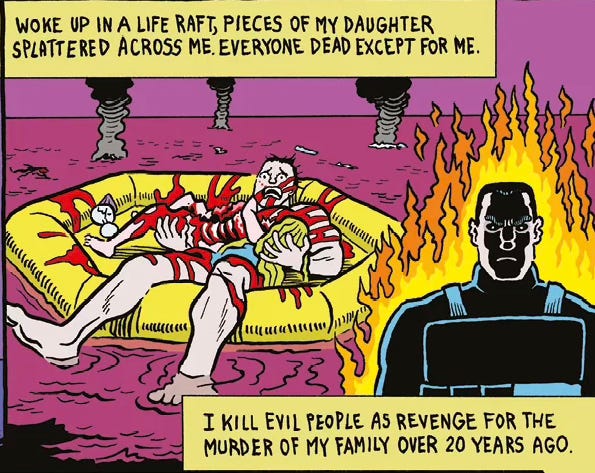
Annihilator is a Simmons-ian heightening of the mainline Marvel Comics character The Punisher, who started as a villain (guy who has PTSD and starts killing people who “deserve killing”) and eventually became and anti-hero as Americans needed a way to justify their bloodlust. This first chapter of a longer story features our “hero” killing criminals and on the scent of a seemingly-murderous cult leader.
Marvel Knights: Punisher (2025) is maybe a reboot for the character, but to be honest, I’d never know, because I couldn’t care less about continuity. I picked it up because I find Palmiotti’s crime comics to be charming in their directness, a comics version of the best kind of action movies, with humor and sex1 and self-awareness of their limitations. And Dan Panosian, who I remember as a oddball version of what Jim Lee and Scott Williams were doing in the ‘90s, has grown into an artist that consistently makes comic art that I love to look at, even if he rarely applies it to stories I want to read.2
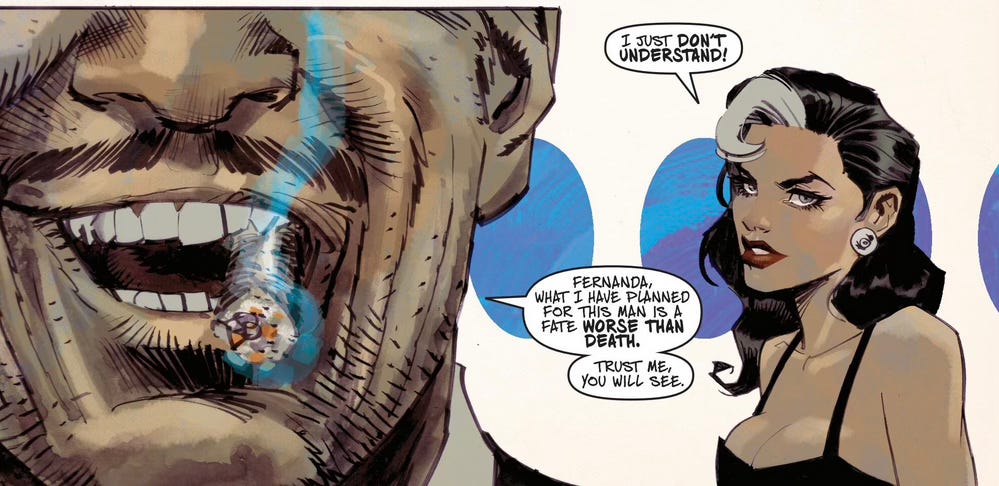
I read the first issue and it felt like they had an idea where they were going, but I was a bit lost (I know, I know). Then I Kagi-ed3 a bit of text from the time jumps (“The World To Come”) and learned that I stepped into a goddamned crossover. I don’t know what it’s about because I don’t care. In this issue Frank Castle meets and is overtaken by a character calling himself “El Zombie” and by the end of the issue he has been captured for 156 days and drugged so that he appears under the control of a drug lord and is now calling himself “El Zombie” as well. Like so many comics, it’s all a bit silly. I will say there is a tremendous scene in the just-released third issue where Frank Castle learns he, while under mind control, has killed innocent children and I was definitely shocked to see what happens next. That’s the kind of thing I look to Palmiotti for. He’s not afraid to take things up a notch.
Panosian’s art is always worth the attention. His design sense (as opposed to his ‘90s fealty to Lee/Williams fine-linery4) works well with his modern style, which marries Sergio Toppi with Mort Drucker.5 It also works very well that he colors his own art. He really takes the page seriously as a single unit of comics storytelling, designing for panels to continue or complement one another, and can work with a writer that’s also a visual storyteller to bring it together. He can get a bit busy and even muddy occasionally, but every page has inking or layout that he pulls off with flair.
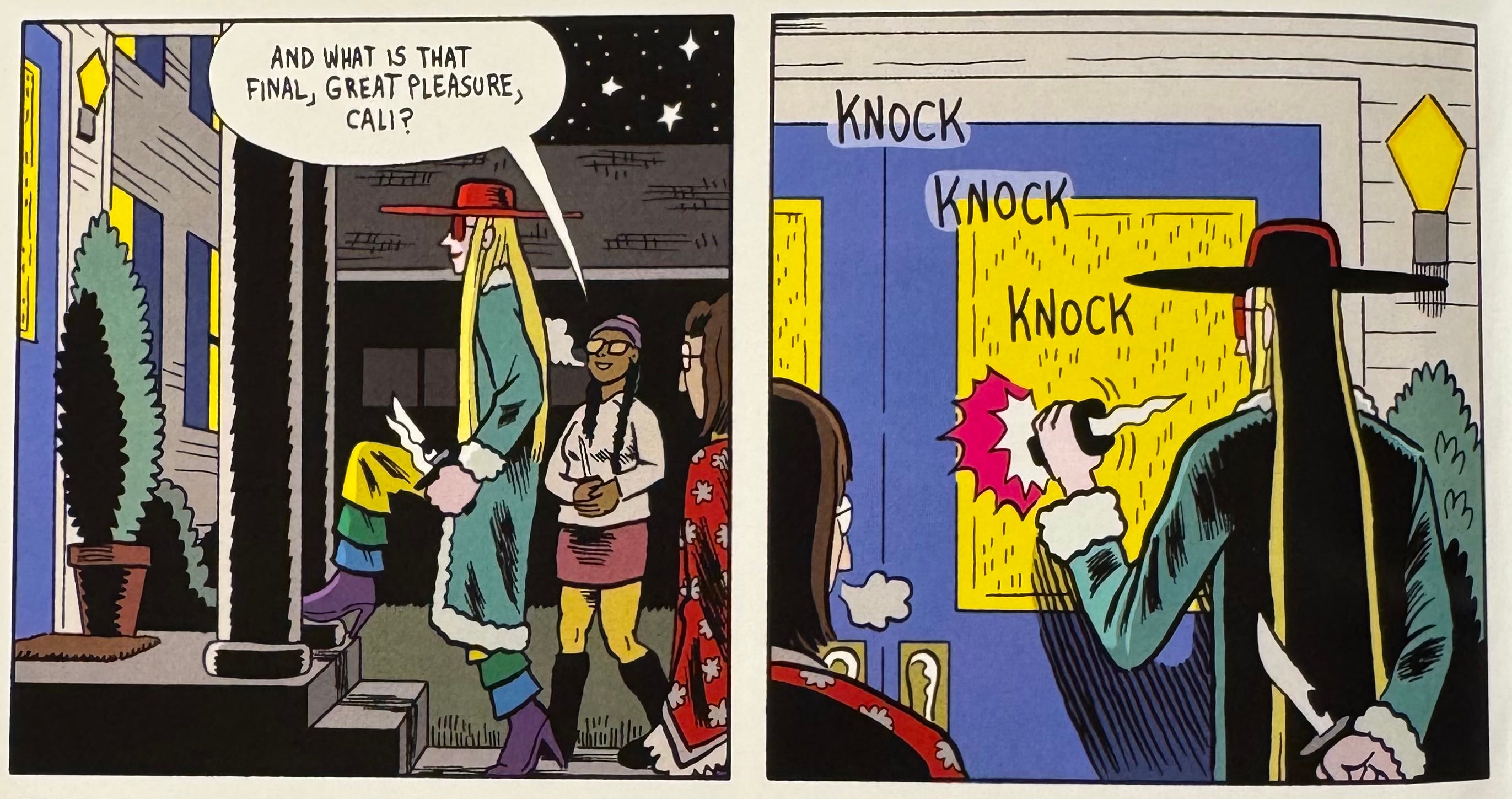
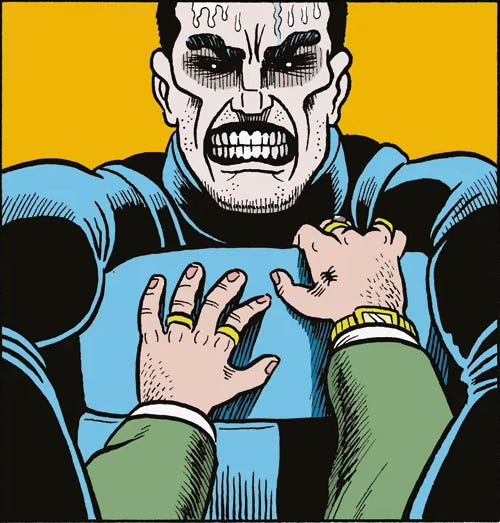
Annihilator, on the other hand, like most of Josh Simmons’s work, always running at 11. Even when he’s in a quiet moment in a story, he manages to find a level of simmering dread that you know will pay off. There is a sequence with the cult leader, that I’m not going to display here, that is shocking in what I think of as a Josh Simmons way. The dialogue expressed might have reminded me of a filmmaker like Todd Solondz if there weren’t the incredible art to take things further and rub our nose in what’s happening. Psychological horror is the only kind I really love. I’ll put up with a well done slasher story, which is what this new Punisher series is when it’s not pure action—zombified characters and graphic violence—but slow and steady foreboding building to human-level violence is always scarier.
Simmons had done a Batman/Joker story with Patrick Keck which took on a more classic comics character, but it was, compared to this 1st issue, much more focused on the psychology of the characters.
This first Annihilator chapter spends three quick pages setting up the Annihilator, including a satire of Frank Castles origin story, then moves on to the horror story of the cult. Maybe he has longer plans for the title character, but this chapter quickly makes Annihilator a background character, essentially transforming him into the foil of an even more sociopathic lead character, Cali, the cult leader. There are reveals about Cali that I don’t want to spoil, but the most uncomfortable part for me is the dialogue, which sounds like any documentary you’ve seen about cults, yet when the magic of comics takes hold and you read it in your head, in the character’s voice, it is seductive and you sympathize with the sycophants. Cali’s dialogue is both so obviously manipulative and it’s easy to understand how a lost soul would be drawn to it.
It’s a natural fit for Simmons to take the horror inherent in a man who dresses as a bat and strikes fear into the hearts of criminals.6 The Punisher mythos is similarly ripe for mining the psychology of someone who causes such violence in the name of protecting the innocent, the way many of us7 see the irony in the police commodifying the Punisher skull. I expect Simmons might get there, but even if he doesn’t he always finds a way to shock and sicken me, and this cult story will make a good method for that.
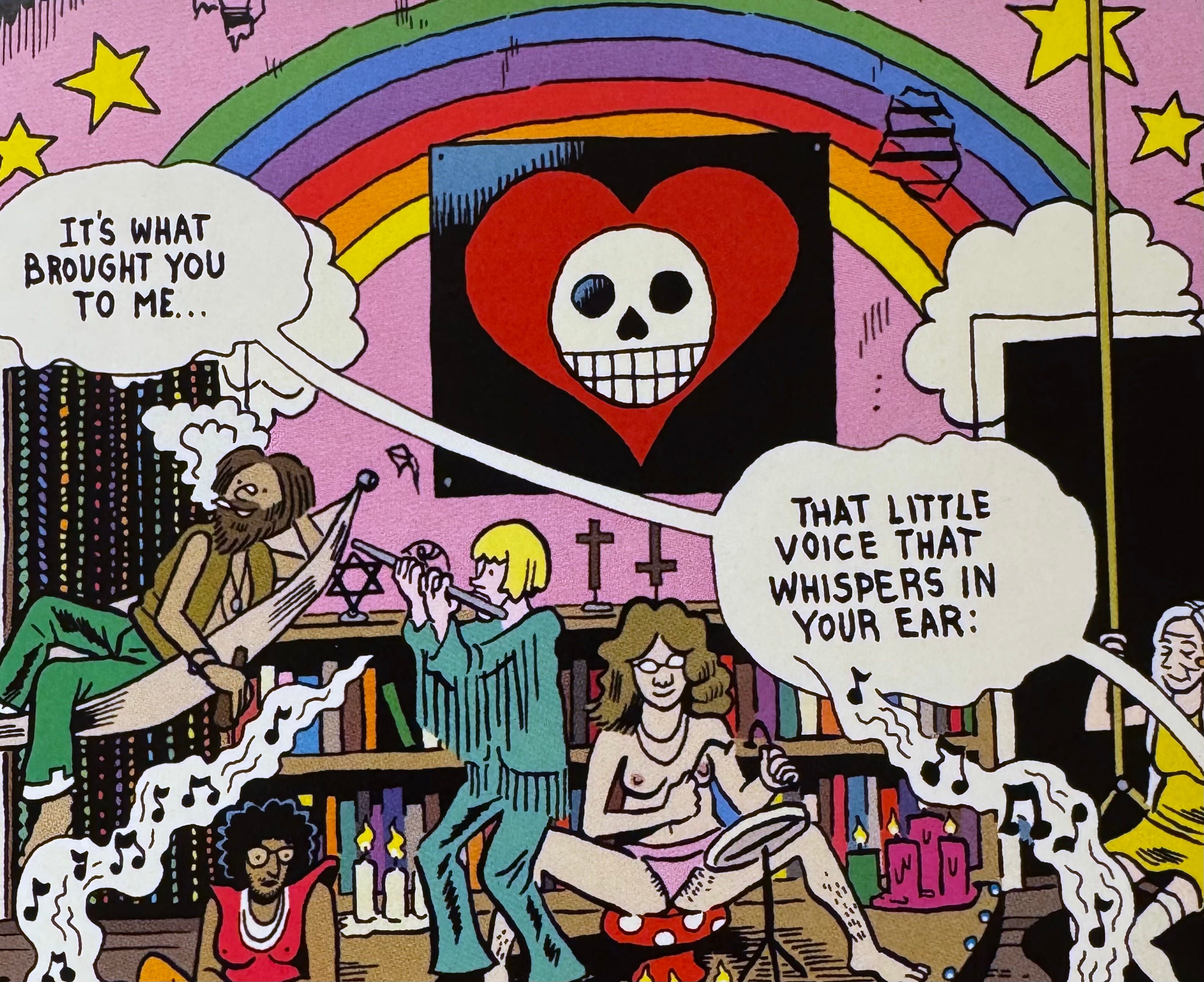
Speaking of iconography, I almost overlooked what a magical piece of design work Josh Simmons uses in Annihilator: The Skull-Heart icon.
Connected by release year, I thought there might be symmetry in these initial chapters of new stories related to the mythos of Frank Castle, but they are so entirely the work of their respective creators that they bear almost no resemblance to one another except some large weapons and splashes of kevlar. The new Punisher is a trifle of an action book, with some great art and some bullshit crossover, and Annihilator is a new story to add to Josh Simmons oeuvre of the unnerving cruelty of humans against themselves and others. It bears the hallmarks of his work, with psychological and graphic horror and I don’t doubt he will make it more uncomfortable as we go along.
As opposed to classic action movies, this, like all Marvel Comics, only lets them wink at sex, but at least they wink at it. Modern American action movies have become equally sexless, but that’s a topic for someone else.
I mostly see him just on cover art, even for series he wrote, but I really dug Slots and was cool with Canary on Comixology.
I use Kagi, a not-free web search engine. This is not an add, but I didn’t want to type g—gl- and I didn’t think that if I typed I “ducked” it I would be able to avoid a footnote anyway.
Panosian, in the ‘90s, worked at Marvel, mostly as an inker until the post-Image era, and spent time with the Extreme Studios team, where he is the best artist currently in comics from that team. Todd Nauck is a solid journeyman, and Dan Fraga is a good artist who rarely makes comics.
Credit to the great Tegan O’Neil, who I saw mention Panosian as “morphing into Jack Davis”, which I think is a good call, but I see more Drucker there. It may just be that Davis’s people tend toward long and lanky, while Panosian’s have a weightlifter’s thickness to them. It’s also because Panosian clearly draws from classic actors as models, which Davis did mostly with open rendering and clean lines, while Drucker always loved that feathered brush look.
Though the billionaire aspect invites a different approach of horror in a post-Epstein world. The Mark of the Bat was set in a world where money couldn’t buy what Bruce Wayne needed, which is the whole point of Batman in the first place.
The link here is a fantastic Nate Powell essay about the sickness of The Punisher being an aspirational symbol for police. Read it!